Designing With Walnut Finishes
Walnut isn’t just a wood choice. It’s a design decision.
It signals confidence. It brings richness without feeling showy. And when used well, it creates interiors that feel layered, grounded and deeply considered.
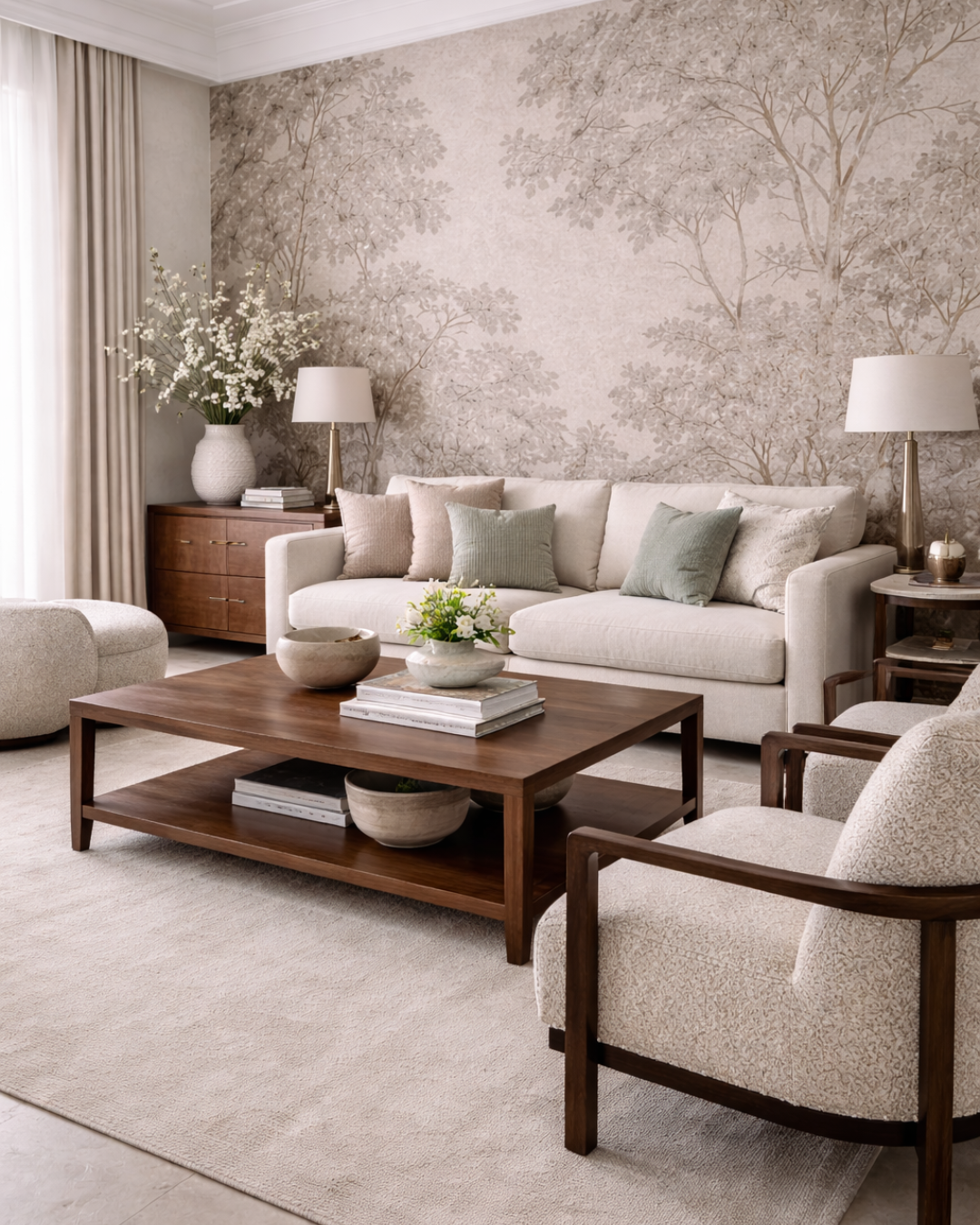
Depth, Warmth & Timeless Character
Walnut is known for:
Deep chocolate and espresso tones
Subtle purple undertones in some lights
Elegant, flowing grain
A natural satin glow
Unlike many darker timbers, it doesn’t feel heavy. The variation in the grain keeps it alive and tactile.
It absorbs light beautifully — which is exactly why it pairs so well with stone, plaster and soft textiles.
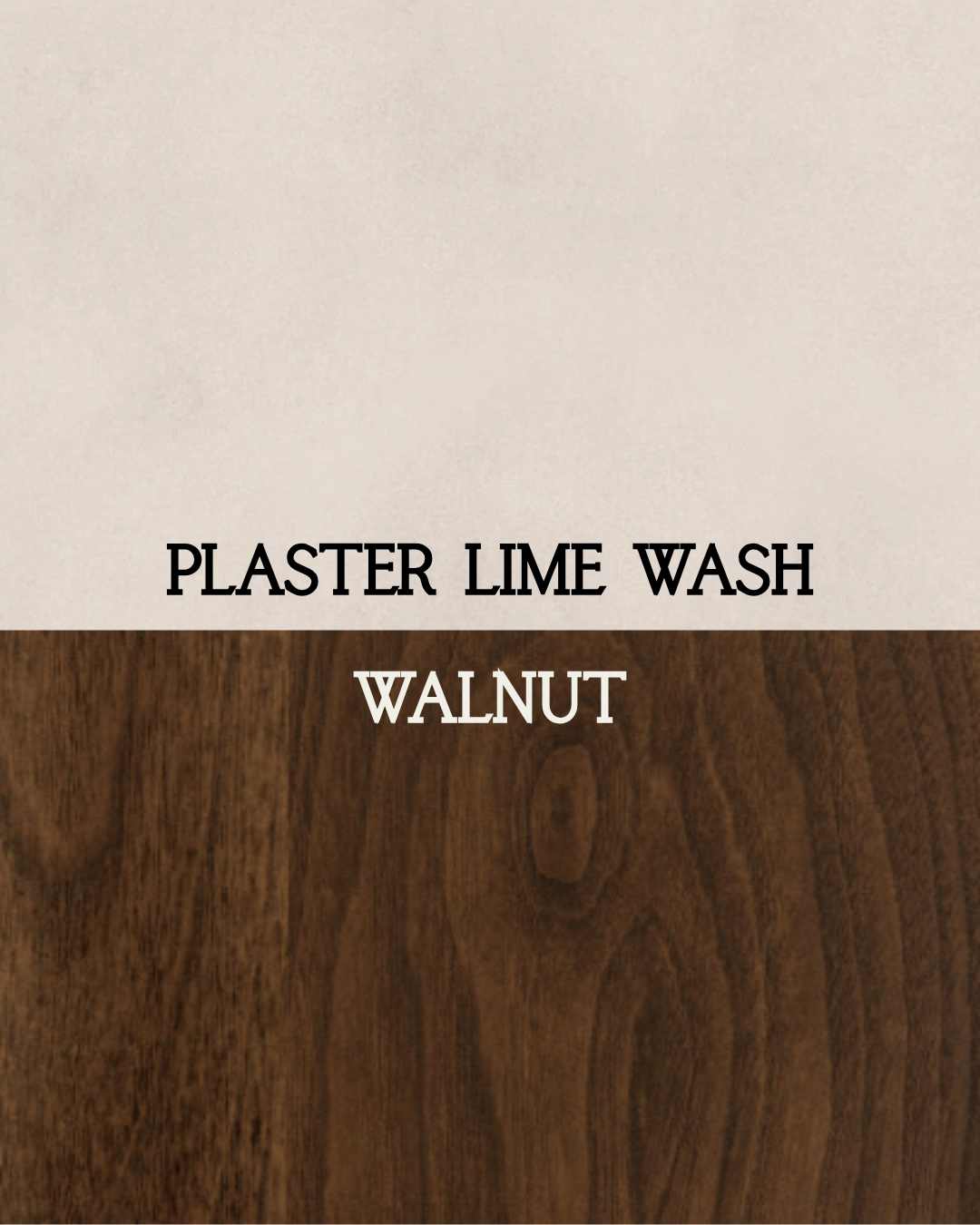
Plaster Lime wash and Walnut
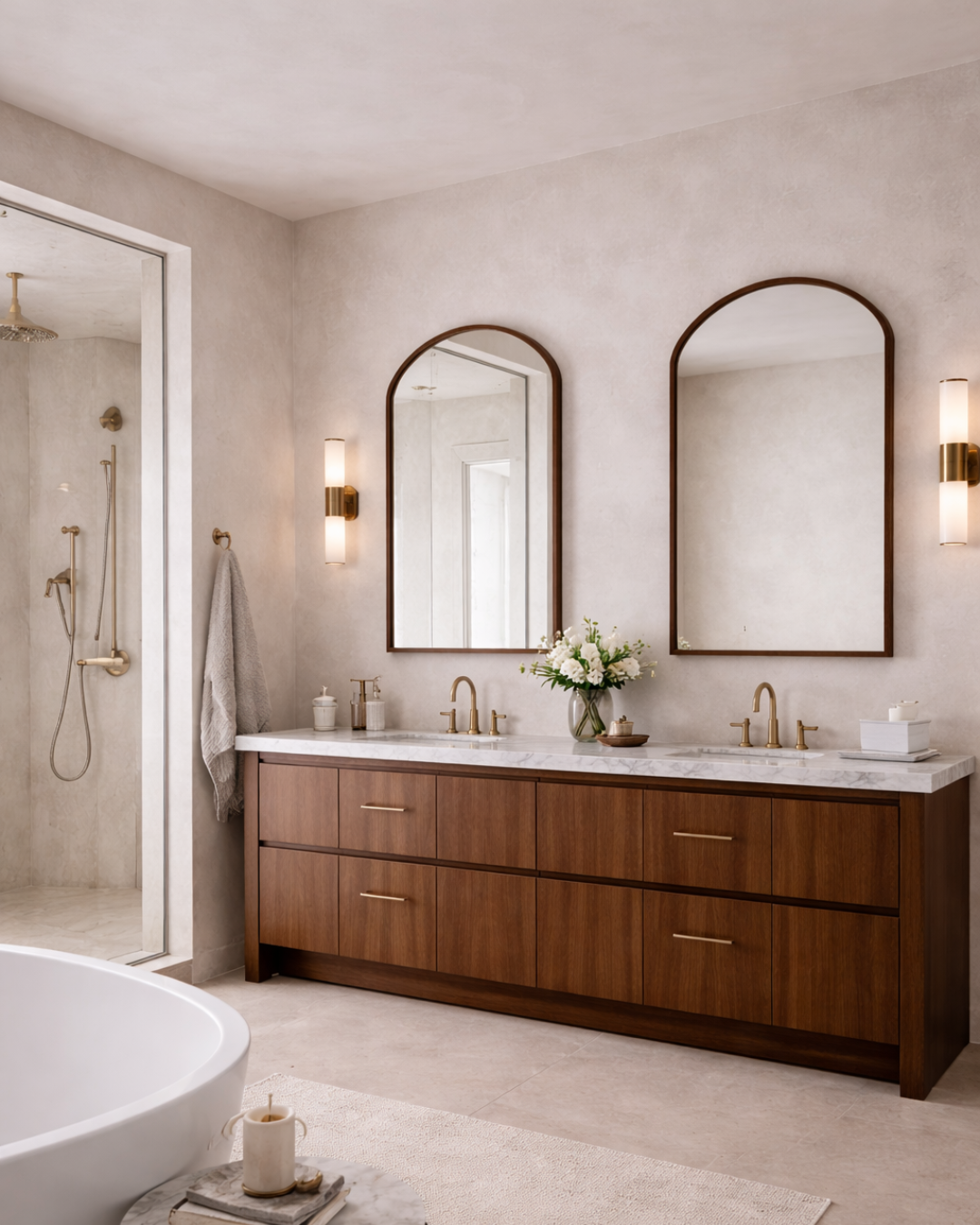
Bathroom image with Plaster Lime wash and Walnut
Walnut kitchens feel architectural.
Pair with:
White or veined marble
Brushed brass or aged bronze hardware
Soft stone flooring
It works especially well in handleless or slab-front designs where the grain becomes the feature.
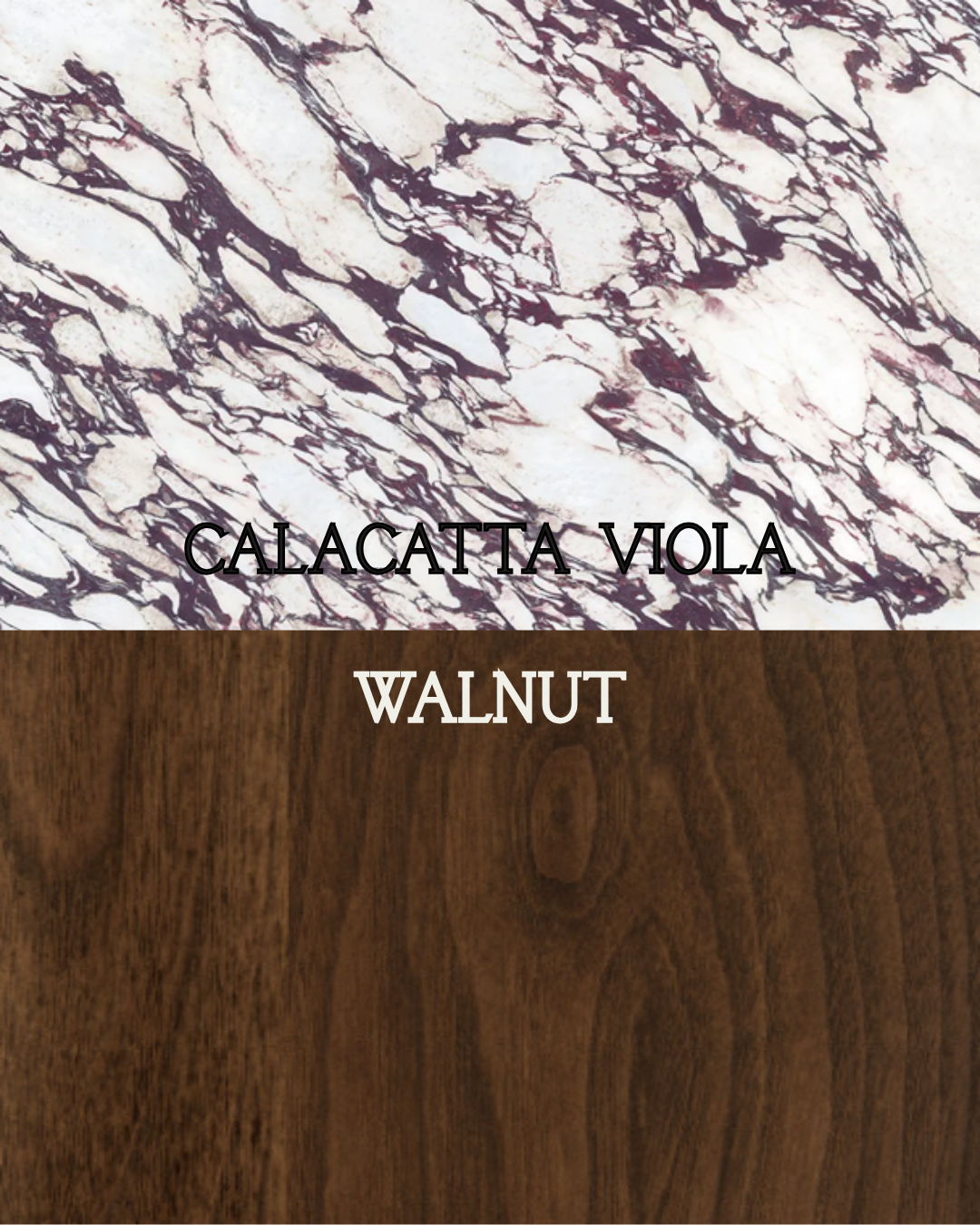
Calacatta Viola and Walnut
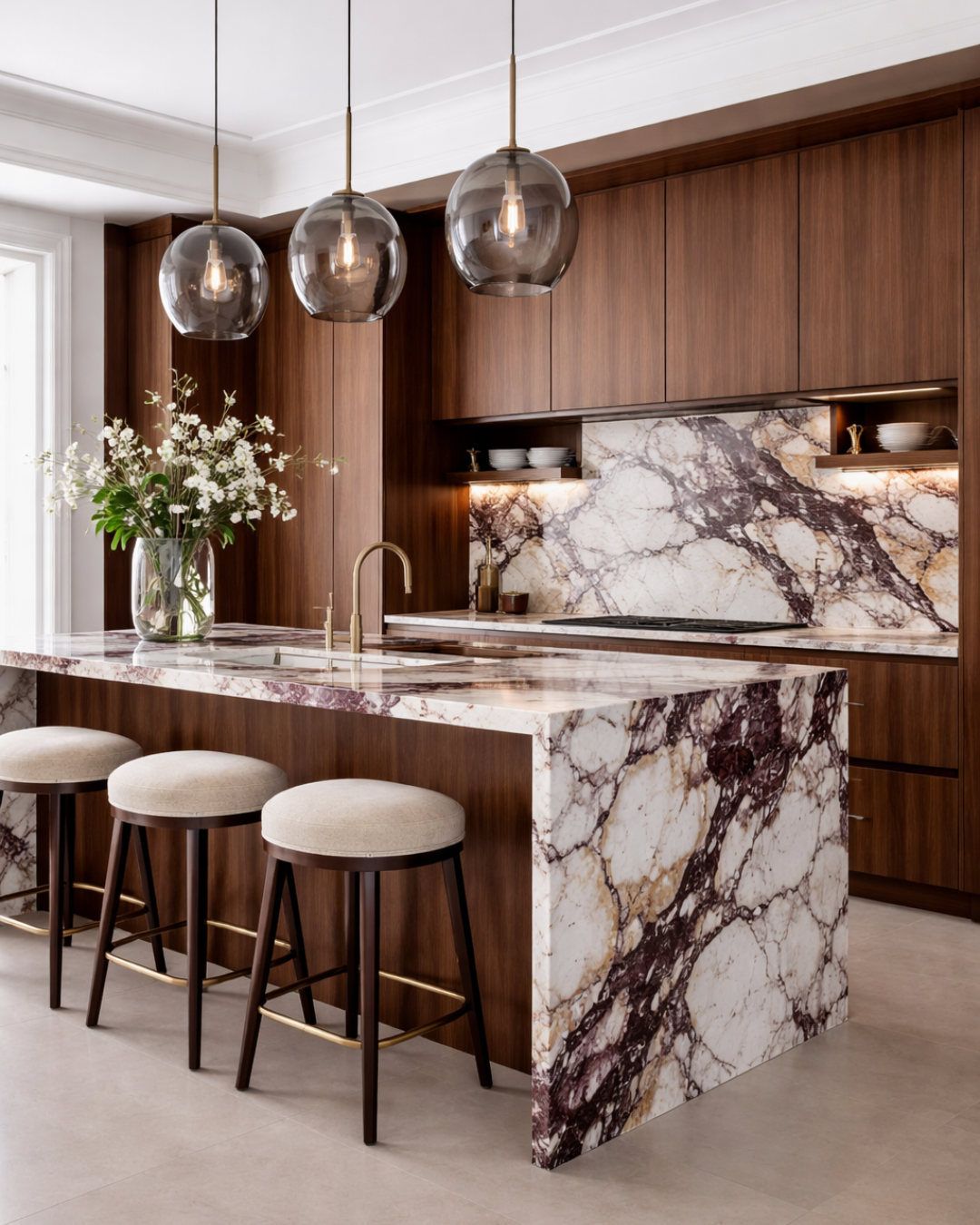
Calacatta Viola and Walnut Kitchen
In bathrooms, walnut prevents stone and tile from feeling clinical.
Try it with:
Plaster finish walls
Travertine
Verde or darker marble
Wall-mounted brass taps
The warmth balances cooler surfaces instantly.
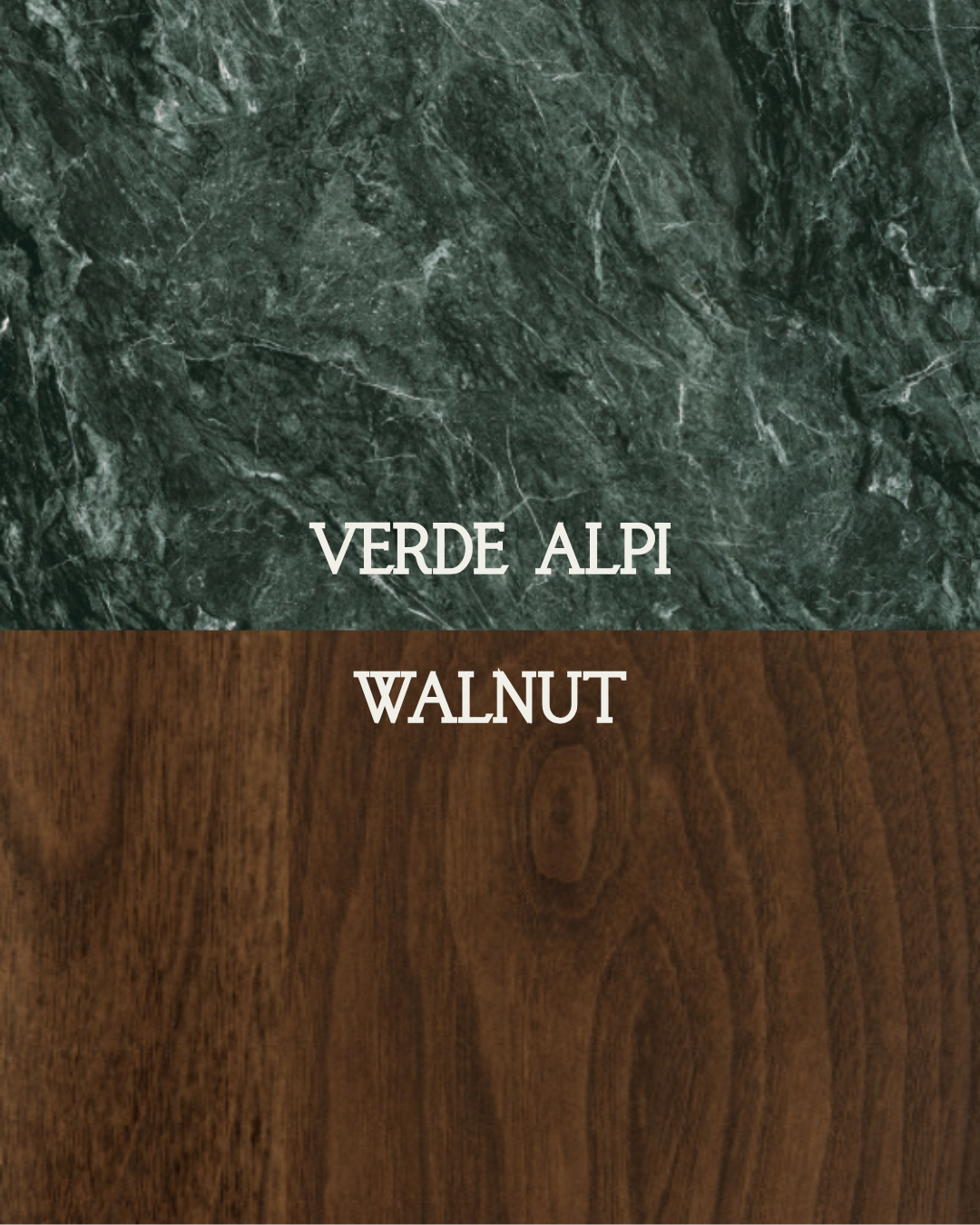
Verde Alpi and Walnut
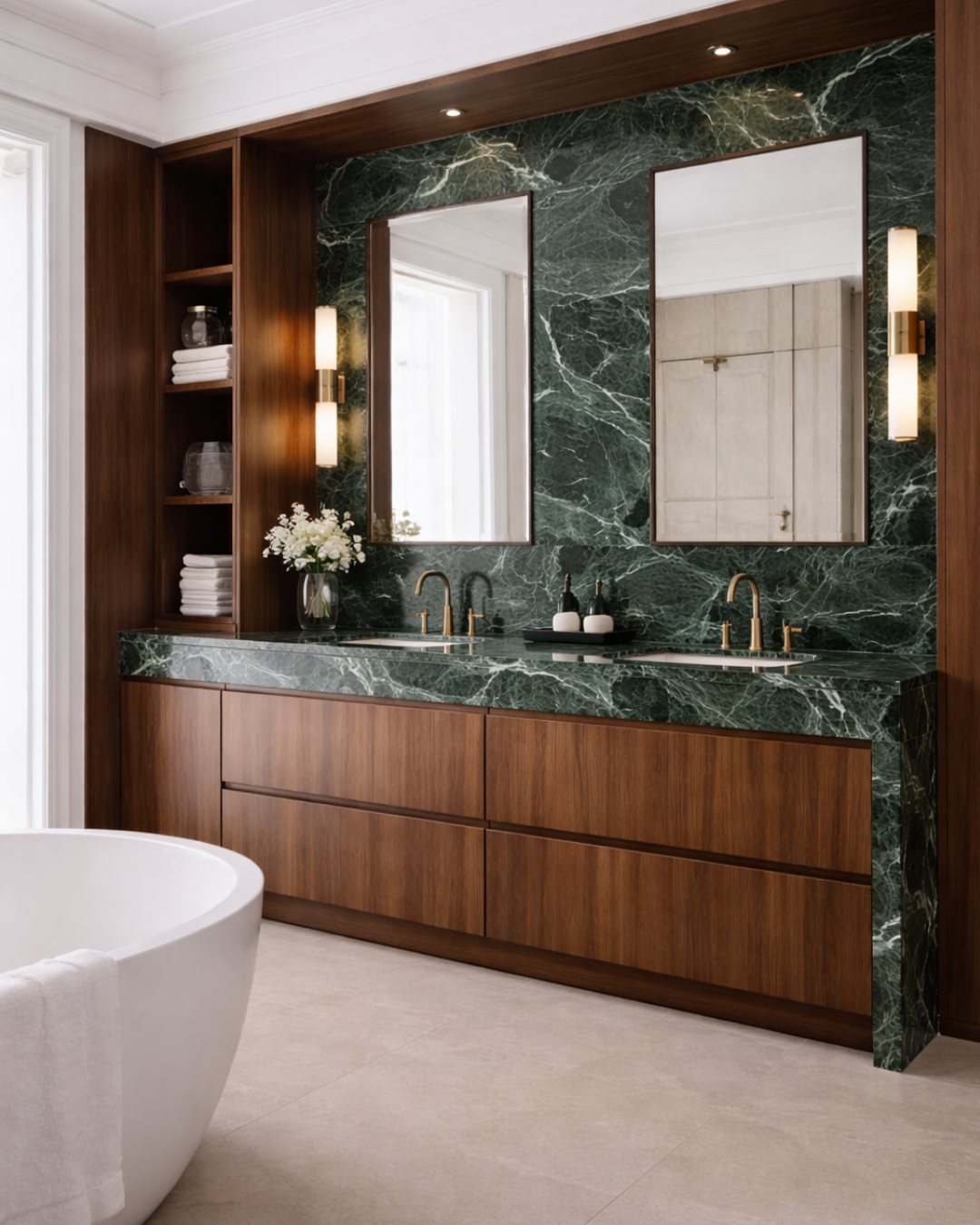
Verde Alpi and Walnut bathroom
Finishes Matter
Walnut can look completely different depending on its finish:
Oiled – soft sheen, very natural
Matt lacquered – modern and clean
High gloss – more formal and dramatic
Fluted or ribbed – adds shadow and movement
If you want timeless, lean toward low-sheen finishes. Glossy walnut can quickly feel dated.
When to Be Careful
Because walnut is darker, you need to:
Balance with lighter walls or flooring
Ensure good lighting (natural or layered artificial)
Avoid pairing with overly yellow lighting — it can muddy the tone
It thrives in rooms with depth and breathing space.
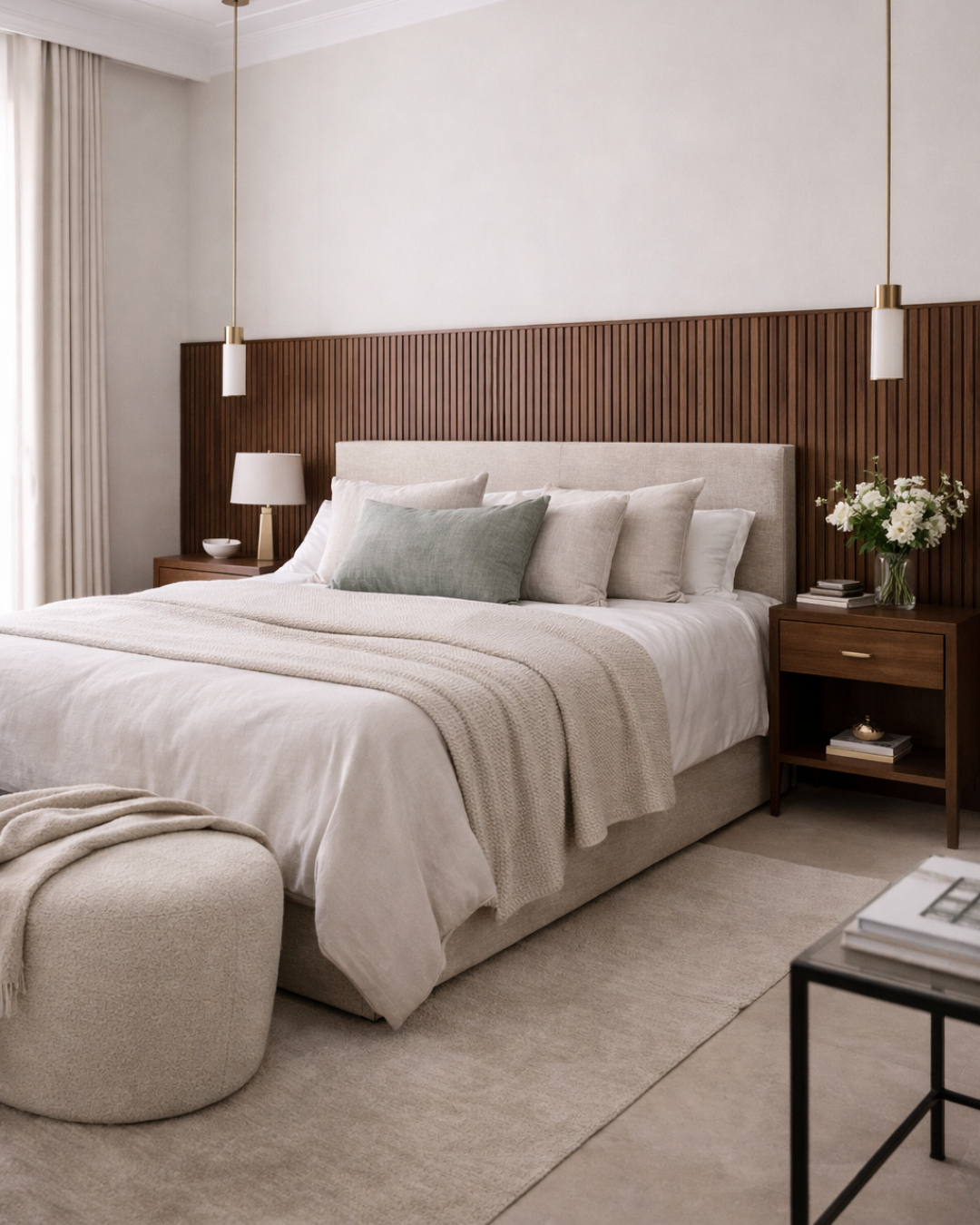
Walnut isn’t loud. It doesn’t chase trends. It doesn’t need embellishment.
It’s a material that brings instant depth, the kind you can’t fake with paint or surface finishes. It makes rooms feel anchored, intentional and layered.
In a world of fast interiors and ever-changing palettes, walnut remains constant. It works in contemporary homes, period renovations, minimalist schemes and richly detailed spaces alike. It elevates plaster. It softens stone. It warms marble. It sharpens brass.
And perhaps most importantly - it ages beautifully.
The patina deepens. The grain becomes richer. The tone grows warmer. Very few materials improve with time in the same way.
If you’re designing a space and wondering whether walnut is “too dark” or “too bold,” it usually isn’t. The key is balance - light around it, texture beside it, and breathing space to let it shine.
Walnut isn’t just a finish.
It’s a foundation.
And when used thoughtfully, it’s the detail that makes everything else feel considered.
Will you consider a walnut finish in your next renovation?
I hope you enjoyed this blog! see you next week
Lots of love
Jess x
If you’re planning a renovation and would like some guidance, feel free to email me at jess@jcavareeinteriors.com - I’d love to hear about your project and explore how we can bring your vision to life.